People often think of security as one job, but in reality, it covers a range of responsibilities, authority levels, and skills. The terms security guard and security officer are both common, but they can mean very different things depending on the organisation, location, and type of work.
Knowing the differences between these roles helps businesses, residential communities, and institutions pick the right security staff. It also makes it easier to set clear expectations and build a strong security system.
What Is a Security Guard?
A security guard’s main job is to keep a specific place safe and secure. Just being there can help prevent unwanted activity. On a daily basis, guards watch over the area, control access, patrol, and report what they see.
The exact security guard role depends on the site. Guards may be stationed at commercial buildings, residential complexes, warehouses, hospitals, educational institutions, hotels or industrial premises. They may monitor entrances, verify visitors, observe surveillance systems and respond to incidents according to established procedures.
Also Read: Frontline Security and the Changing Role of Professional Guards
Understanding Security Guard Duties
The security guard duties that are assigned to a particular place are normally practical and are tied to the location. Tasks may include checking IDs, maintaining records of visitors, controlling access points, doing patrols, etc.
In emergencies, guards help by calling the right authorities, guiding people to safety, or following the company’s emergency plan. Sometimes, they also check vehicles, watch over deliveries, or protect certain valuable items.
Because of these duties, guards need to be alert, disciplined, and good at communicating. They should spot anything out of the ordinary and quickly share important information, instead of trying to handle everything on their own.
What Is a Security Officer?
A security officer often has more responsibilities, especially in bigger organisations or complicated settings. Their job might include supervising guards, putting security plans into action, writing reports, and organising how to respond to incidents.
The difference between guard and officer isn’t always just about the job title. Some companies call people ‘officers’ if they have extra duties, while others use the term for all trained security staff. So, it’s important to look at what the employer expects from the role.
Understanding Security Officer Duties
The security officer duties may extend beyond routine observation and access control. Officers can be involved in evaluating risks, supervising security teams, reviewing incidents and ensuring that established protocols are followed.
When something happens, a security officer may work with managers, emergency services, or other staff. In places with several security workers, the officer might assign tasks, hold briefings, and make sure all information is recorded correctly.
Because their job covers more areas, officers need good judgment and must stay calm when facing surprises.
Key Security Officer Roles
Security officer roles can look very different depending on the industry. In a big office building, an officer might manage access and lead a team. At a factory, they could watch for risks and make sure security rules are followed in different parts of the site.
Some private security officers work in special settings where keeping information private, acting professionally, and working well with others are very important. They might work closely with property managers, staff, or clients while making sure security standards are met.
Also Read: Bank Branch Security Challenges and How Professional Security Services Can Help
Security Guard vs Security Officer: The Main Differences
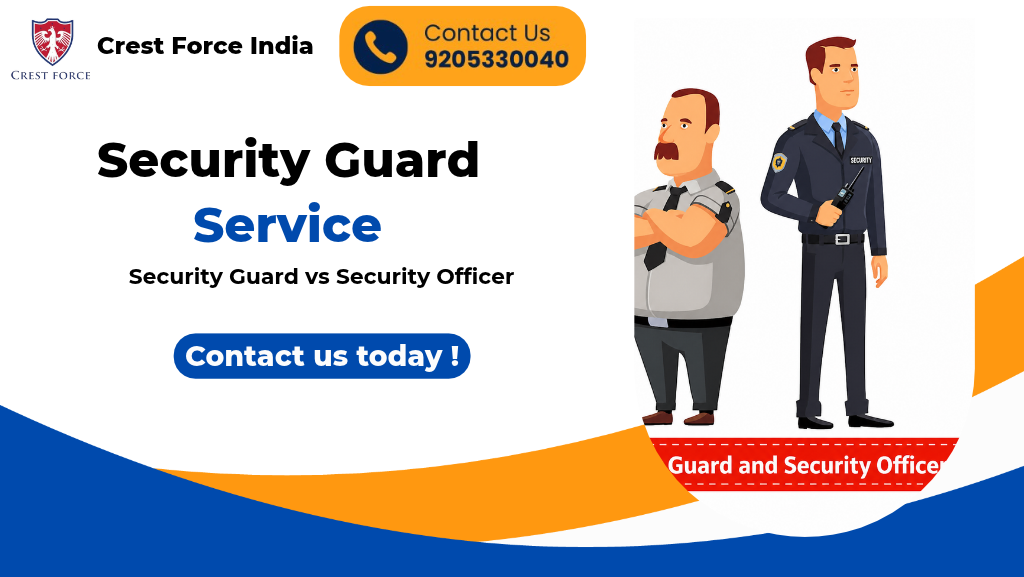
The biggest difference between guards and officers is usually how much responsibility they have. Guards are often given a specific spot to watch, while officers might supervise others, handle paperwork, or coordinate activities as well as provide security.
Training and experience are different too. Guards need to know their site’s rules and how to react to incidents. Officers often need extra skills, like supervising, assessing risks, keeping records, and managing a team.
Authority is another key difference. Guards usually follow set instructions and report serious issues to the right people. Officers may have more say in making decisions, as long as they stay within the company’s security rules.
But these differences don’t always apply everywhere. The job title, required licenses, industry rules, and how complex the job is can all affect what each role means.
Choosing the Right Security Personnel
Businesses should start by figuring out what they really need from their security team. A small office with limited access might just need someone to manage entries and watch visitors. Bigger places like factories, apartment complexes, or company campuses may need both guards and supervisors.
Experience, training, communication skills, and attitude often matter more than the job title. Companies should also think about shift schedules, risks at their site, emergency plans, and how much supervision is needed.
Working with an established security guard agency can make this process easier because the organisation can receive personnel according to the nature of its premises and operational requirements.
Building an Effective Security Structure
Good security doesn’t depend on just one person. It works best when everyone knows their job and how they fit into the bigger picture.
For example, a guard at the door might spot something unusual and quickly tell their supervisor. The officer can then look into it, organise the response, and write up what happened. This way, there’s a clear process instead of leaving everything to one person’s judgement.
For bigger sites, having both well-trained guards and experienced officers helps create a security team that can respond quickly and stay organised.
How Crest Force India Supports Security Requirements
At Crest Force India, we know that every place has its own security needs. We provide trained staff who match each client’s operations, whether that means access control, surveillance, patrolling, supervision, or handling incidents. We believe good security comes from professionalism, discipline, clear communication, and understanding each site’s needs. By matching our people to each job, we help organisations build a reliable security system instead of using a one-size-fits-all solution.
Conclusion
The distinction between a security guard and a security officer ultimately depends on responsibility, authority, experience and the requirements of the assignment. While guards generally focus on frontline protection and monitoring, officers may take on broader supervisory and coordination functions.
Knowing the difference helps organisations pick the right people and set up clear security procedures. Whether you need one trained person or a whole team, choosing the right staff and defining their roles is key to creating a safe, well-run place.
Our Popular Security Services: Apartment Security Guard | Female Security Guard | Event Security Guard | Office Security Guard | Bank Security Guard | Industrial Security Guard | Bouncer Guard Service
Areas We Serve: Best Security Guard Companies In Delhi | Security Guard Services Gurgaon | Best Security Company In Noida